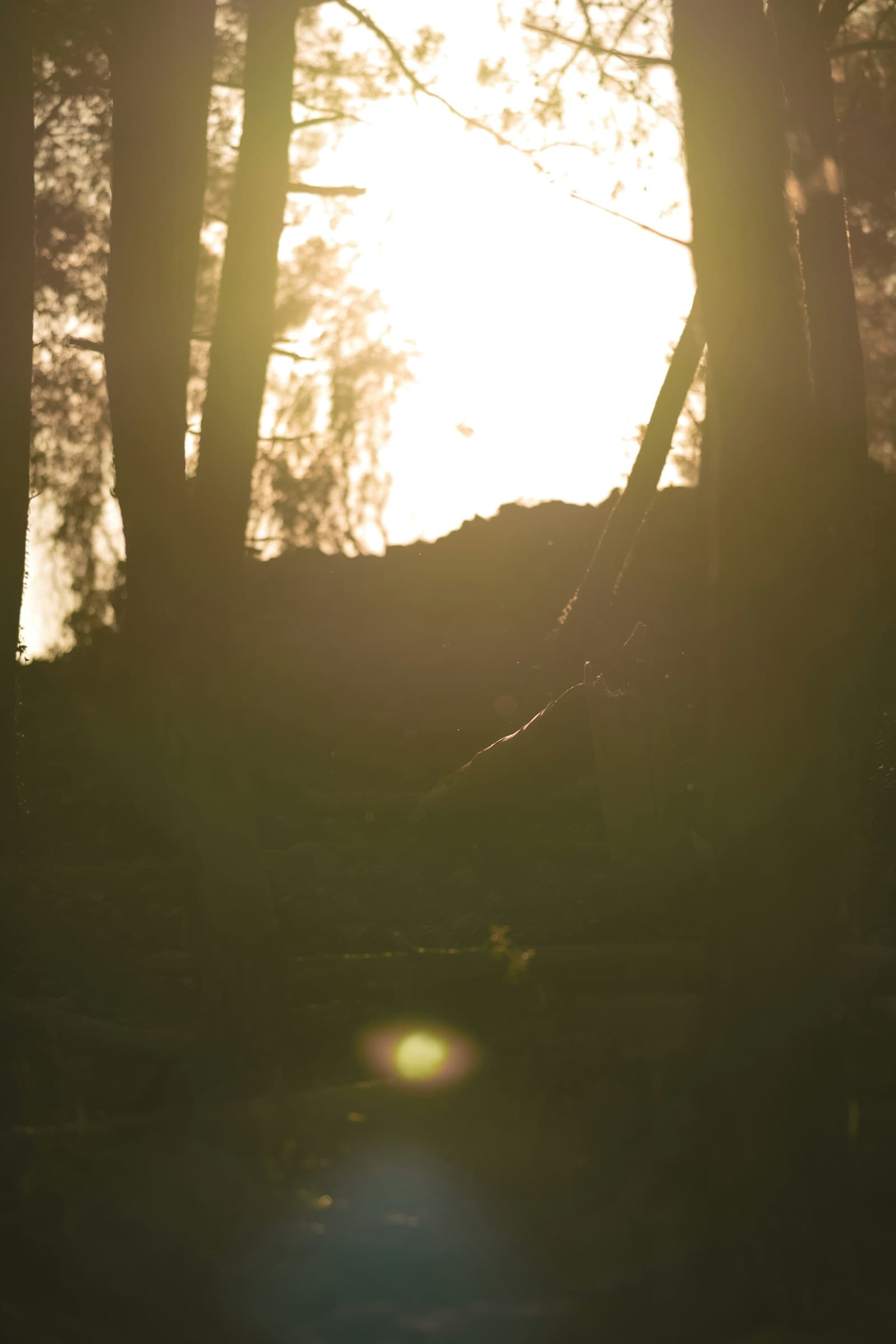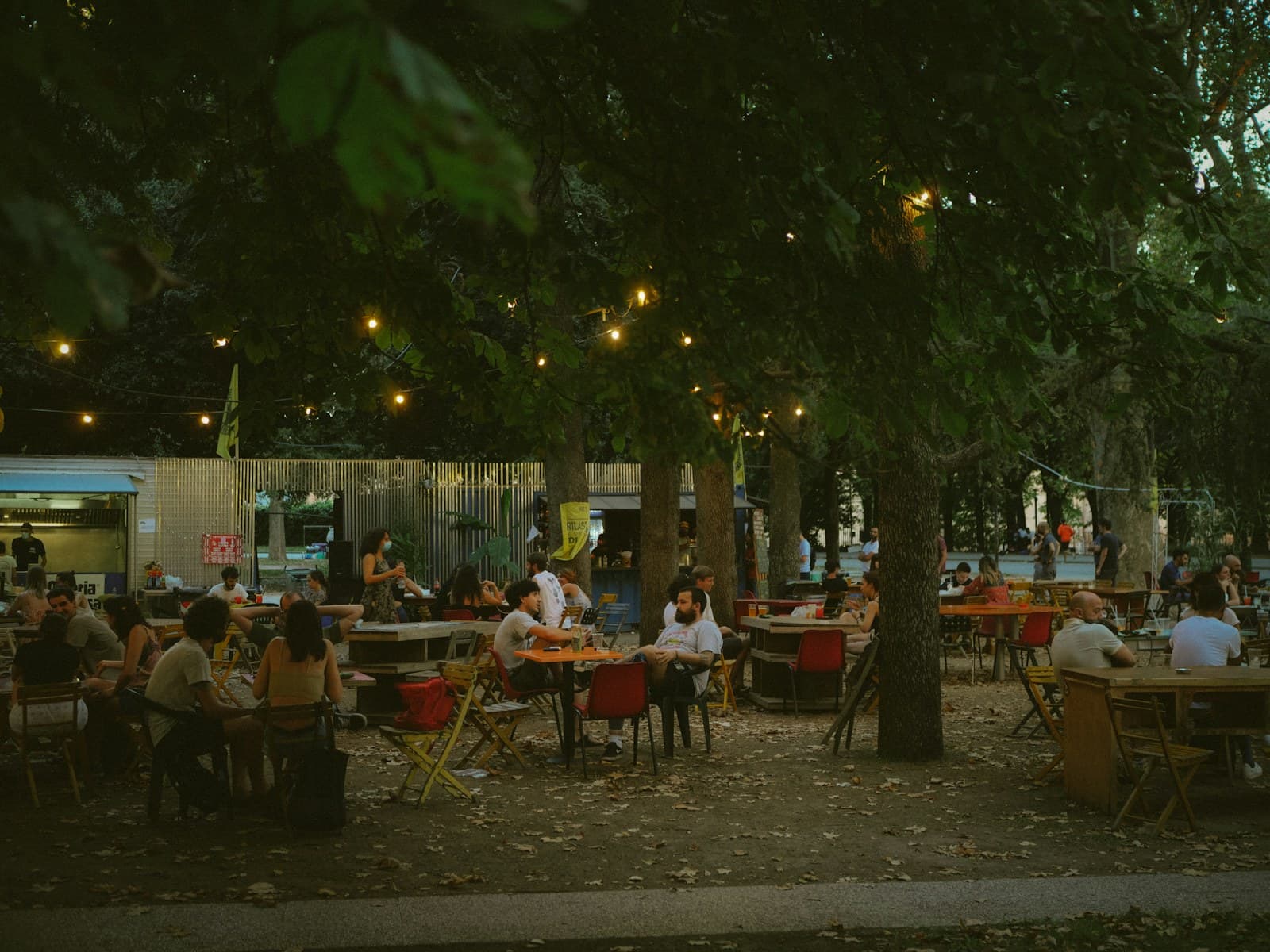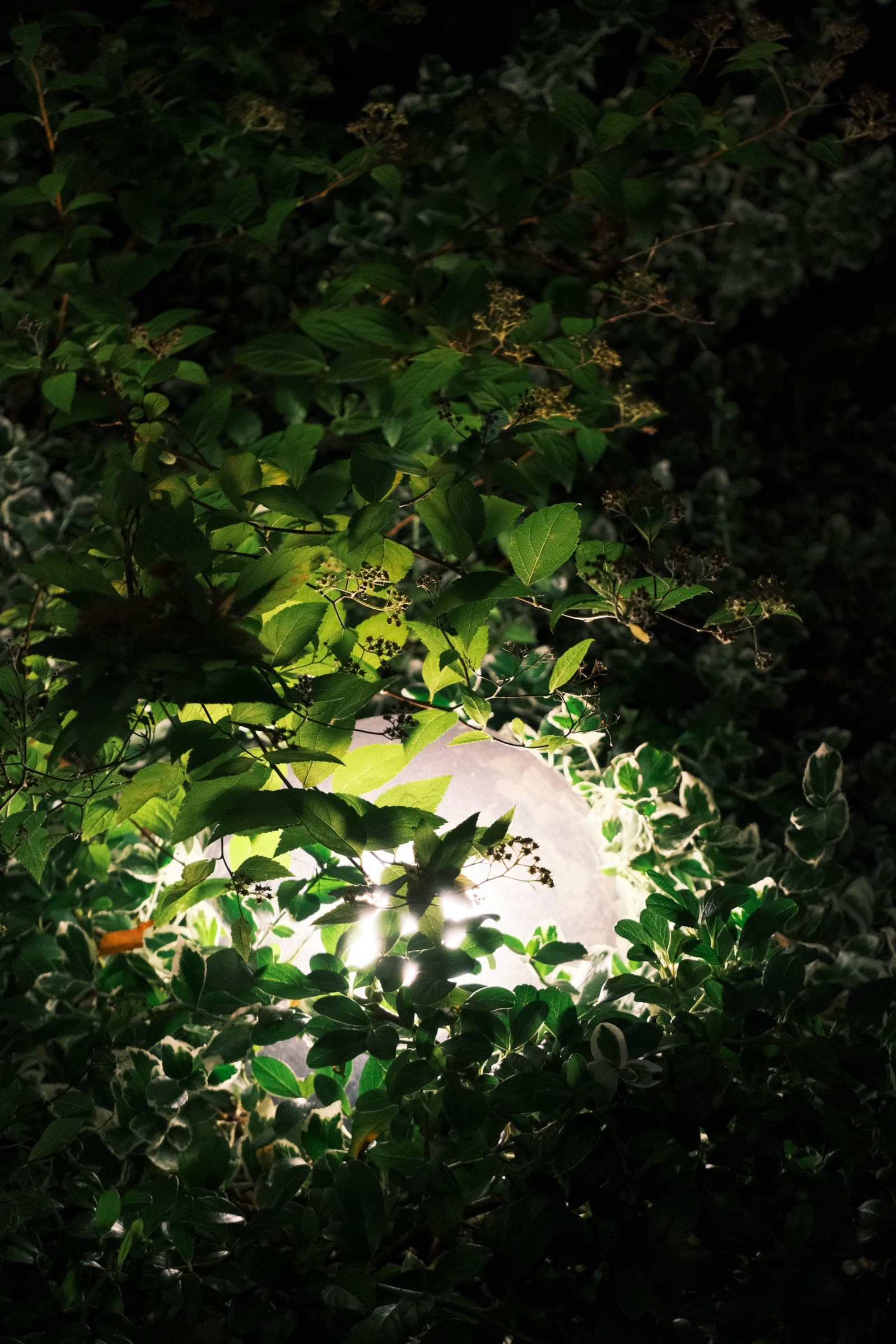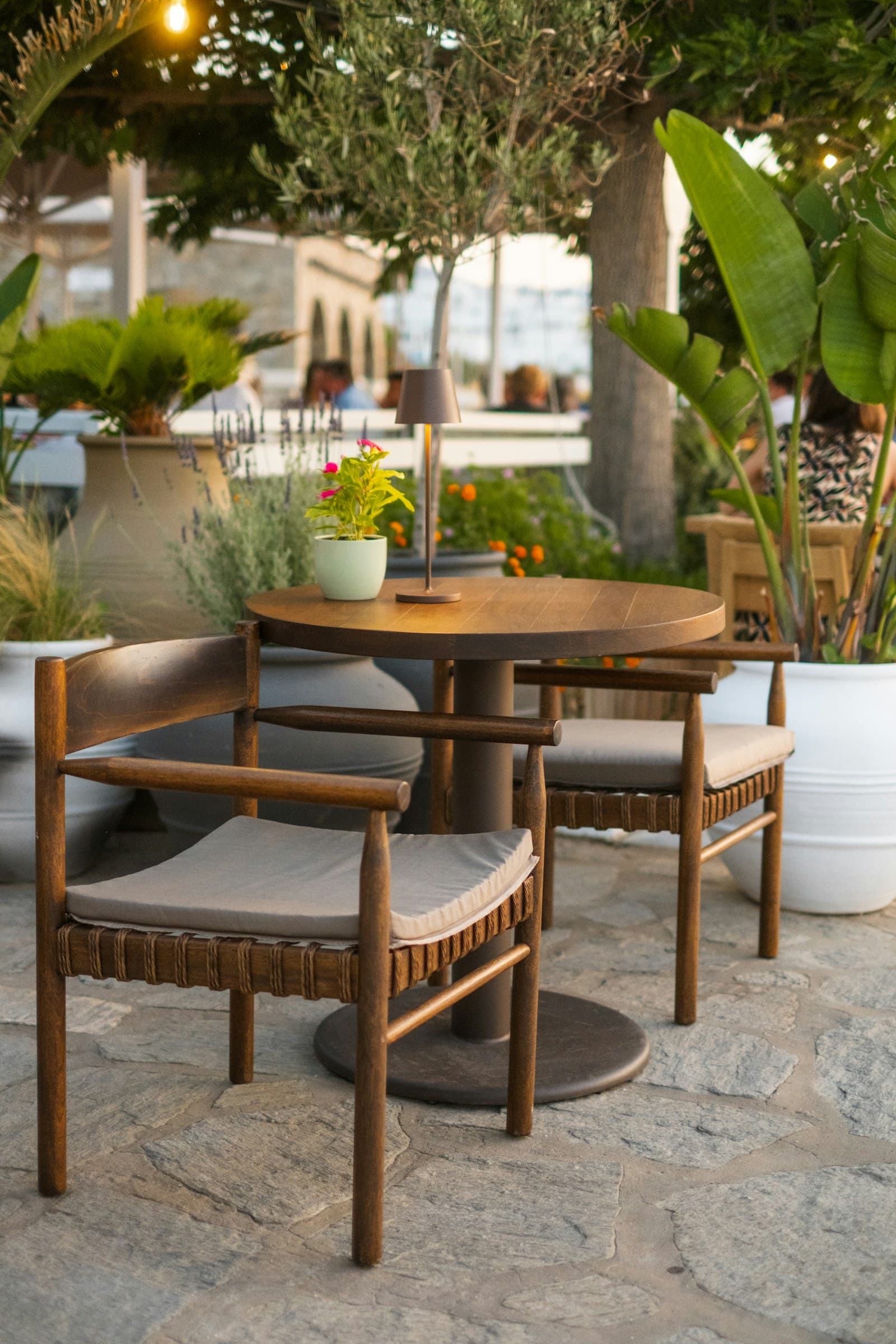
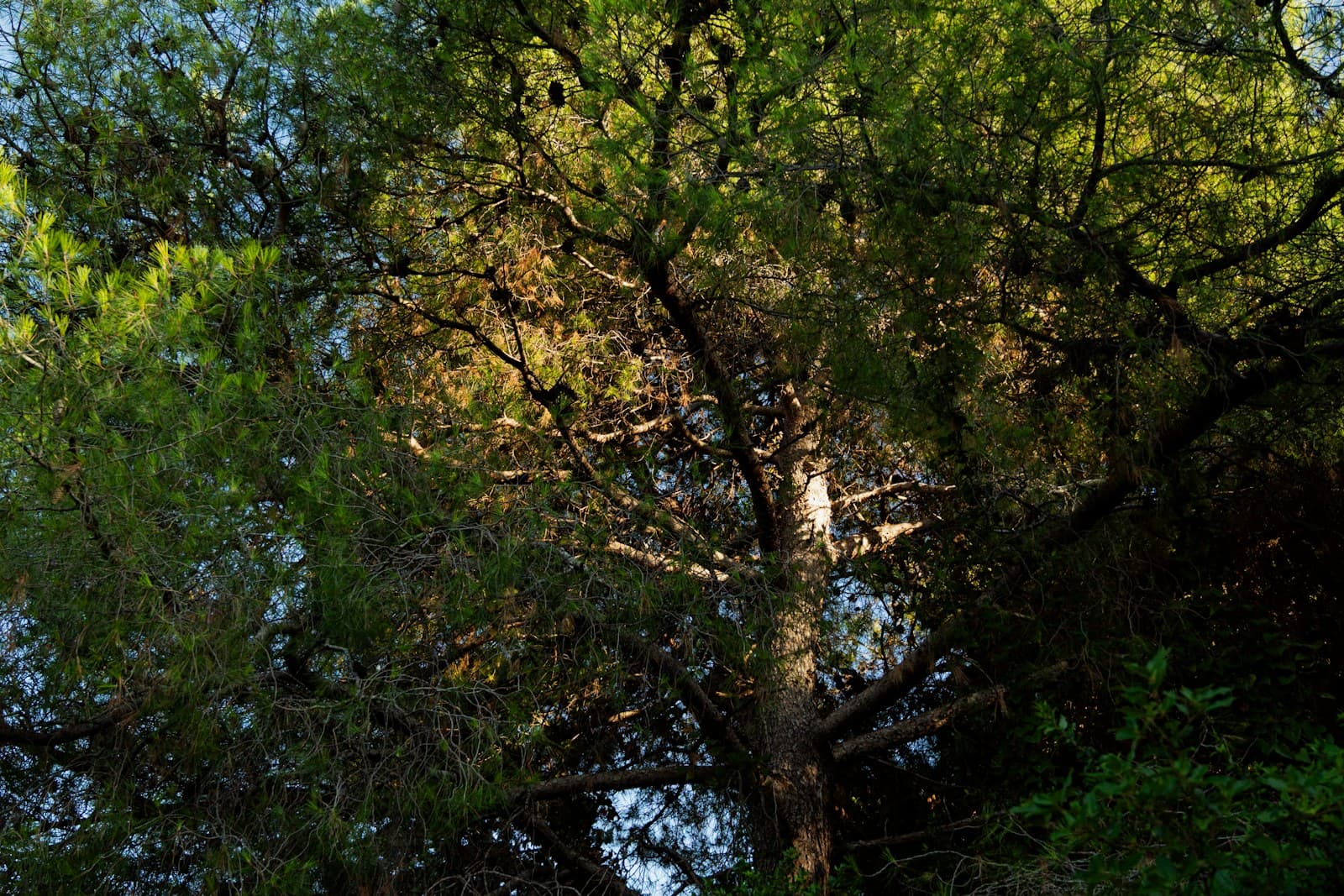
On a clear evening, walk under an oak with a full moon overhead. The light comes through the branches in slow, broken patterns. It moves a little when the leaves move. It softens the edges of the patio and the garden and the stone. It feels like the tree is doing the lighting, because it is.
Aerial moonlighting reproduces that effect on a calendar that does not depend on the moon. We mount fixtures high in mature trees, aim them downward through the canopy, and let the branches do the rest. The light that reaches your dining patio, your pool deck, or your front walk arrives soft, dappled, and in a pattern that imitates what the moon would be doing if you were lucky enough to have it directly overhead.
What makes it different from any other tree fixture.
Most lighting installers will, if you ask, mount a flood up in a tree. The result is rarely good. A floodlight pointed down from a tree produces a circle of bright ground, glare visible from below, and a feeling that something has gone wrong overhead.
Moonlighting is a different fixture, mounted higher, aimed wider, and selected specifically for the depth of the canopy and the effect you want underneath. A moonlighting fixture is not visible from the ground. The light it produces does not look like a fixture. It looks like the tree is glowing softly from inside.
Why it requires a specialist.
The work begins with the tree, not the fixture. We assess structure, canopy density, species, growth habit, and any damage or stress. We mount with hardware that allows the tree to grow without being girdled. We run the low-voltage feed up the trunk in a way that disappears against the bark and does not interfere with the cambium layer.
From there, fixture selection drives the result. Beam spread, lumen output, color temperature, and aim are chosen for what is actually below. A dining patio at twelve feet wants a different setup than a thirty-foot pool deck. A canopy with deep, dense leaves wants a different beam than a sparse, open one. Color temperature is selected to read like moonlight, not like a security floodlight.
Aim is the last step and the most important. We dial in onsite, in the dark, with you. Two degrees on a fixture twenty feet up makes a meaningful difference to the patch of light on the ground.
Where it works best.
Mature oak canopies on estate lots are the canonical case. Granite Bay, the older parts of Auburn, El Dorado Hills (especially Serrano), Loomis, Penryn, and the older streets of Rocklin and Folsom are all rich in the kind of trees this technique was made for.
Within a property, the highest-leverage placements are over a dining patio under a tree, over a pool deck shaded by a canopy, along a driveway lined with mature trees, and over an outdoor seating area where the alternative would be a lamp post or a pole light. In each case the moonlighting fixture replaces an obvious lighting solution with an invisible one, and the result is dramatically more beautiful.
How we design and install.
The process begins with a site walk at dusk so we can see the trees and the property without lighting. We talk through the spaces you use, the trees we are considering, and the effect you are looking for. We propose specific fixtures, mounting locations, and aim before any install begins.
Install is staged: tree mount, low-voltage routing, fixture install, and then a final dial-in session at night to adjust aim and brightness on every fixture. We do not finish a moonlighting project in daylight, and we do not bill it as finished until the client has stood underneath the result with us and approved it.
Why we love this work.
Honestly, because most of the people who hire us for moonlighting did not know what they were missing until they saw it. The first night the system runs is usually a quiet sit-down on the patio with a drink and a long pause. That moment is the reason we built the company to do this category at a designer level. It is the most beautiful effect in residential outdoor lighting, and very few installers in the region do it well. We do.